Create a Dataset Using Flat Files
This guide walks you through creating a dataset in AIV using flat files. Flat files let you paste or manually enter tabular data directly—no file upload required.
What You’ll Learn
- What a flat file is and when to use it
- How to create a dataset from pasted or manually entered data
- How to review, preview, and save your dataset
What is a Flat File?
A flat file is a collection of records in which the data follows a uniform format. Each line typically holds one data record, and columns are categorized consistently. Flat files can contain CSV, JSON, Excel, TSV (tab-separated), or PSV (pipe-separated) data that you paste or type directly into AIV.
| Characteristic | Description |
|---|---|
| Format | CSV, JSON, Excel, TSV, or PSV |
| Entry | Paste from spreadsheet or type manually |
| Use case | Quick prototypes, small datasets, manual data entry |
Prerequisites
Before you begin, complete these steps:
- Have tabular data ready to paste (from a spreadsheet such as Excel or CSV)
Using the sample workflow?
- Download the sample file: excel.zip
- Extract the zip archive
- Open the file in your spreadsheet application
- Copy the data to paste into AIV
Steps to Create a Dataset Using Flat Files
Complete Step 1 (Navigate to the Dataset Section) and Step 2 (Create a New Dataset) from the Create Dataset guide.
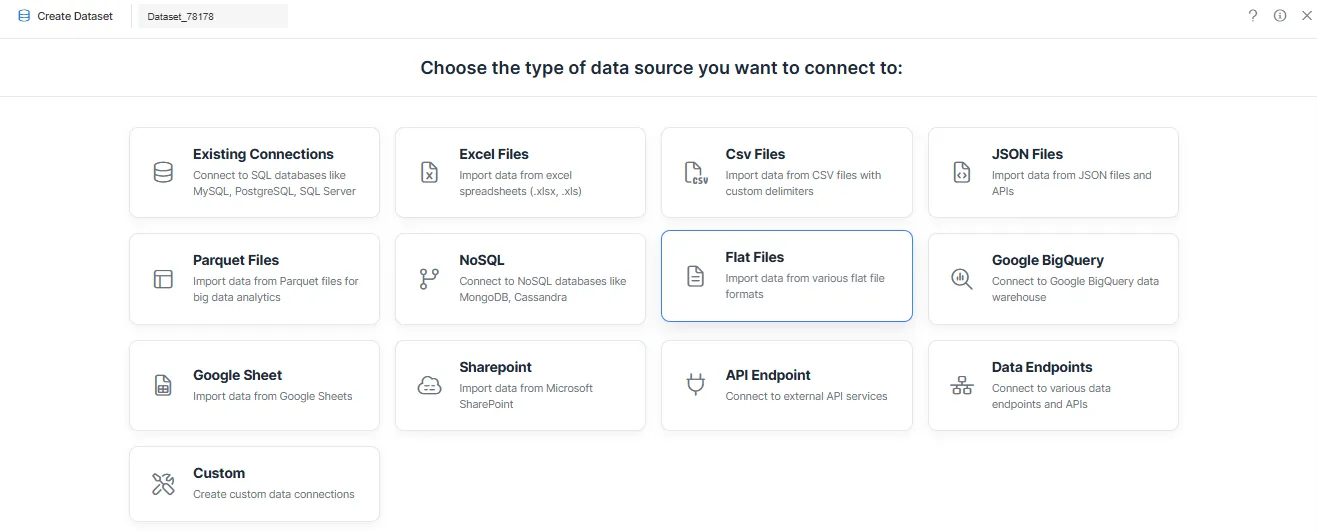
Step 1: Select Flat Files as the Data Source
-
Choose Flatfiles as the data source type.
Step 2: Connection Selection
For details on flat file selection and options, see Connection Selection for Flat files.
-
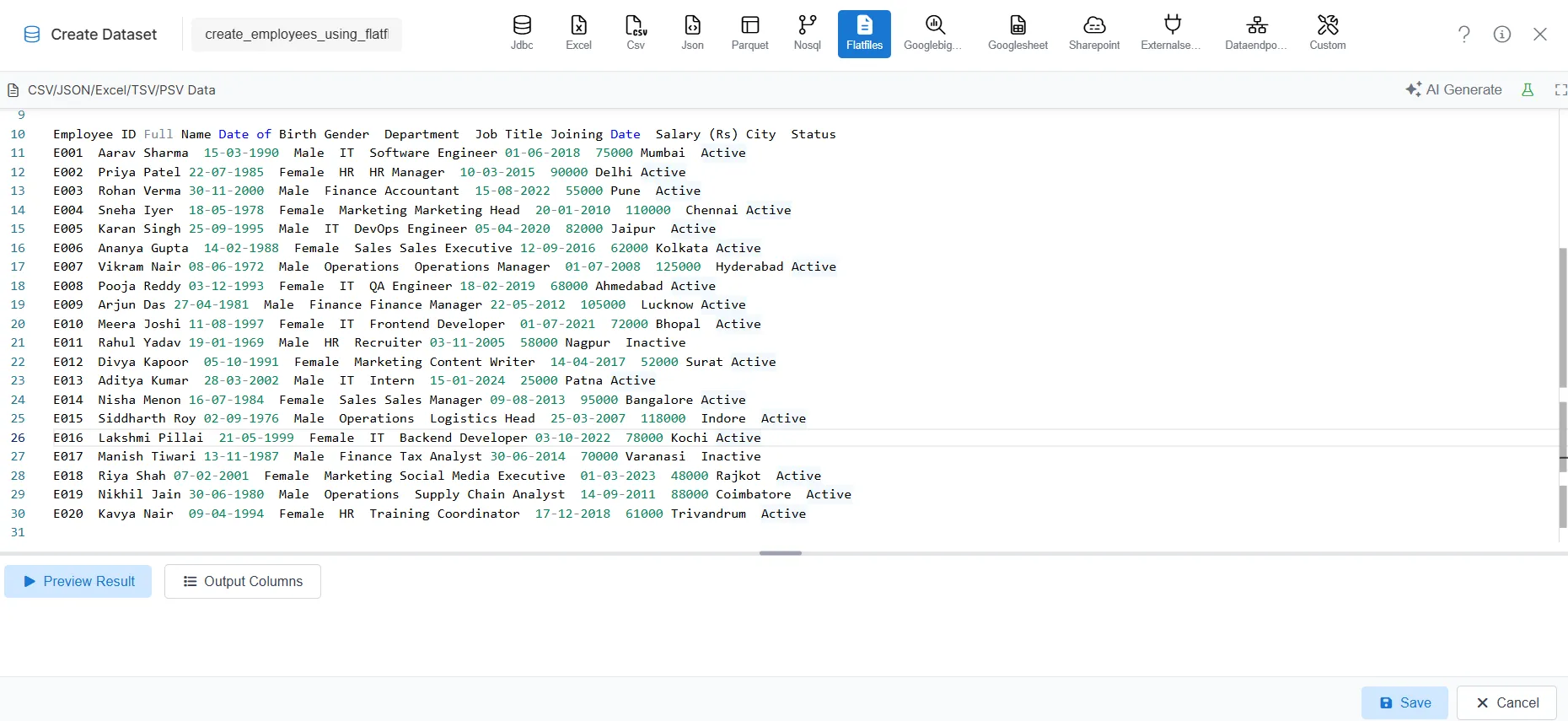
Copy data from your spreadsheet (for example,
employees.xlsx). -
Paste the data into the CSV/JSON/Excel/TSV/PSV Data editor area on the Flat files screen.
-
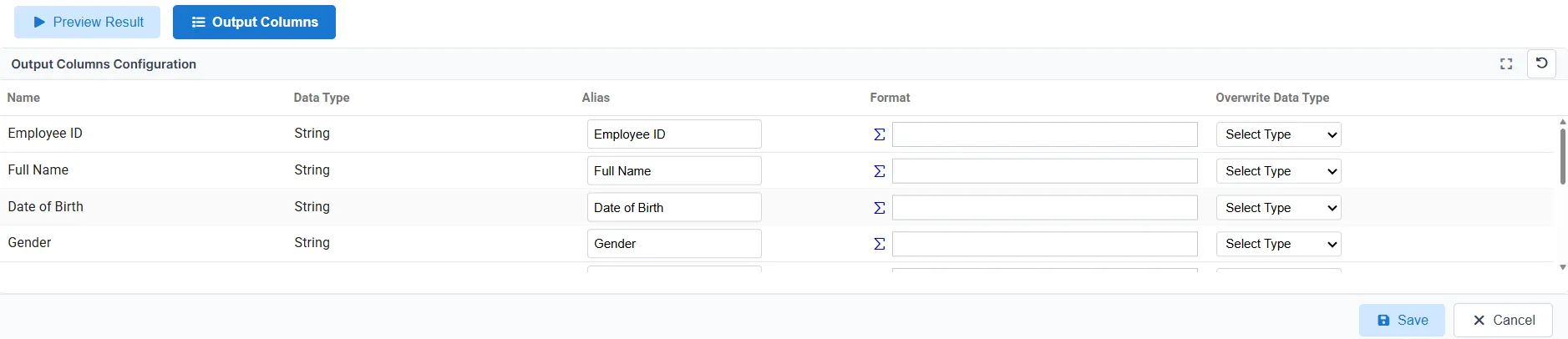
Open the Output Columns tab to review column names and data types.
-
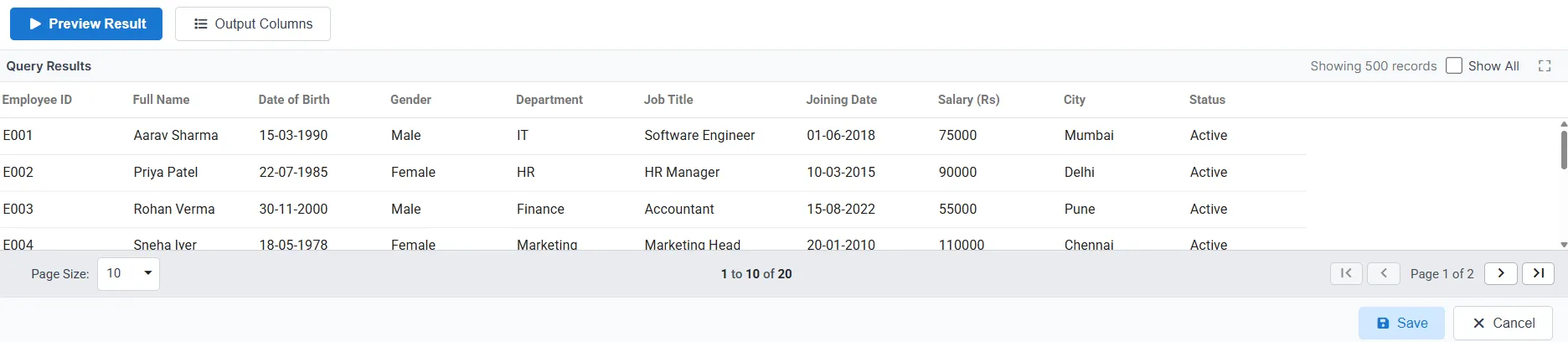
Open the Preview Results tab to verify the data.
Step 3: Save Dataset
- Click Save.
- In the Save Dataset dialog, optionally rename the dataset and select the destination folder.
- Click Save Dataset to confirm.
Step 4: View Your Dataset
- Go to the Dataset Grid view.
- Search for your dataset by name.
- Your dataset is now available for use in dashboards, reports, and visualizations.
Related Guides
Explore other ways to create datasets in AIV:
| Data Source | Guide |
|---|---|
| Drag & drop | Create Dataset |
| Excel | Dataset using Excel |
| CSV | Dataset using CSV |
| JSON | Dataset using JSON |
| Parquet | Dataset using Parquet |
| NoSQL | Dataset using NoSQL |
| Google BigQuery | Dataset using Google BigQuery |
| Google Sheet | Dataset using Google Sheet |
| External sources | Dataset using External sources |
| Stored Procedure | Dataset using Stored Procedure |
| View | Dataset using View |