Chart
The main purpose of Ad-hoc reporting is to empower end-users to retrieve and analyze business data independently. The Chart widget enables users to create customized charts using their own data, allowing them to build insightful visualizations.
Objective
Create Adhoc Report using Chart.
Prerequisite
The Sales.cds dataset is used for this example.
Download adhoc_analysis_chart.zip file.
After downloading the ZIP file, upload the Sales.cds file to the Datasets section in AIV for this example. To upload it, follow this link
Adhoc - Report Chart: This video explains how to create an Adhoc report using the Chart component in AIV.
Steps to Create Adhoc Report using Chart
-
Login to AIV using your credentials.
-
There are three ways to add an Ad-hoc Report in the application:
-
From the Hamburger menu
 , navigate to Documents > Adhoc Reports. Then, click the (+) icon next to “Adhoc Reports”, as illustrated in the figure below:
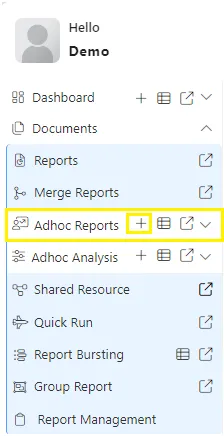
-
Click on the Adhoc Reports grid, as shown in the figure below:

- Right-click on any empty area in the list view and choose Create Adhoc from the context menu.
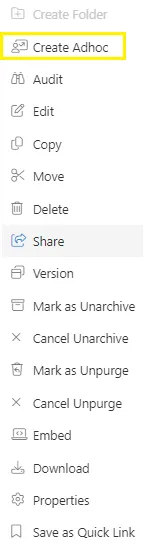
- Right-click on any empty area in the list view and choose Create Adhoc from the context menu.
-
Click the Create Adhoc button located in the bottom horizontal menu bar, as shown in the figure below:
 )
)
-
-
On clicking the Create Adhoc option, from one of the methods mentioned above user will see the window as below:
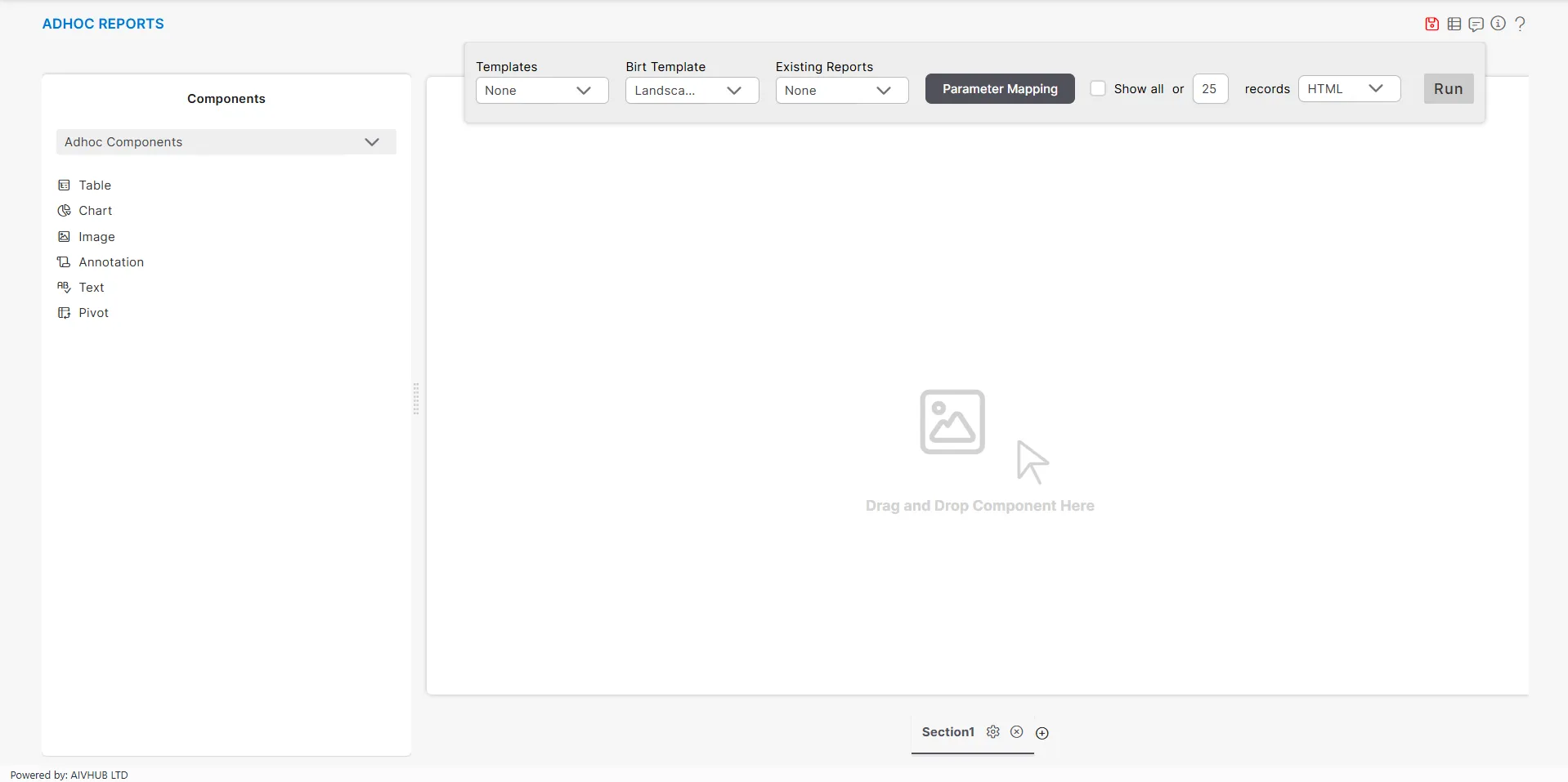
-
Drag and drop the Chart component into the empty area as shown below:
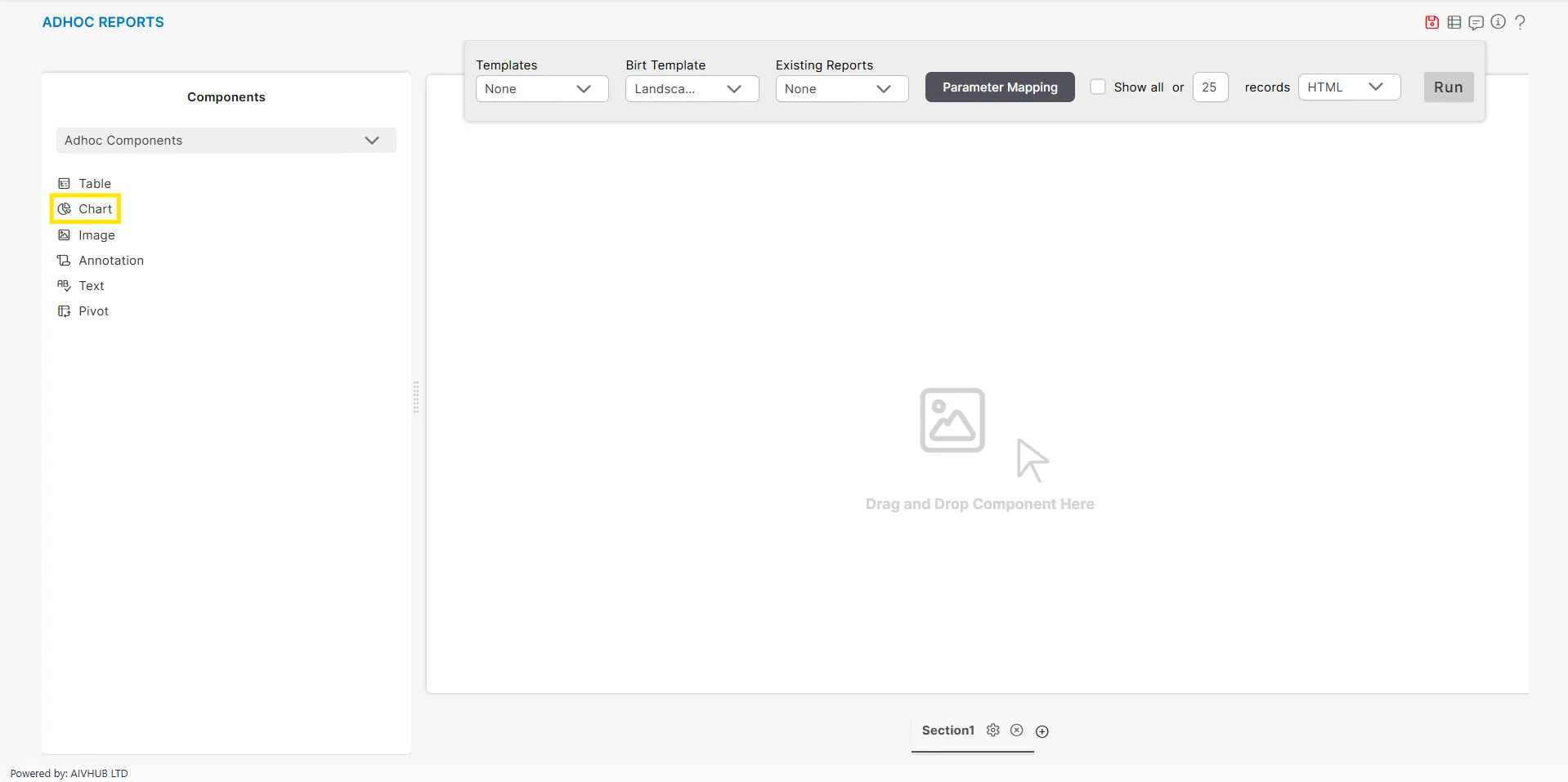
-
After the user performs the above step, the window will appear as shown in the image below:
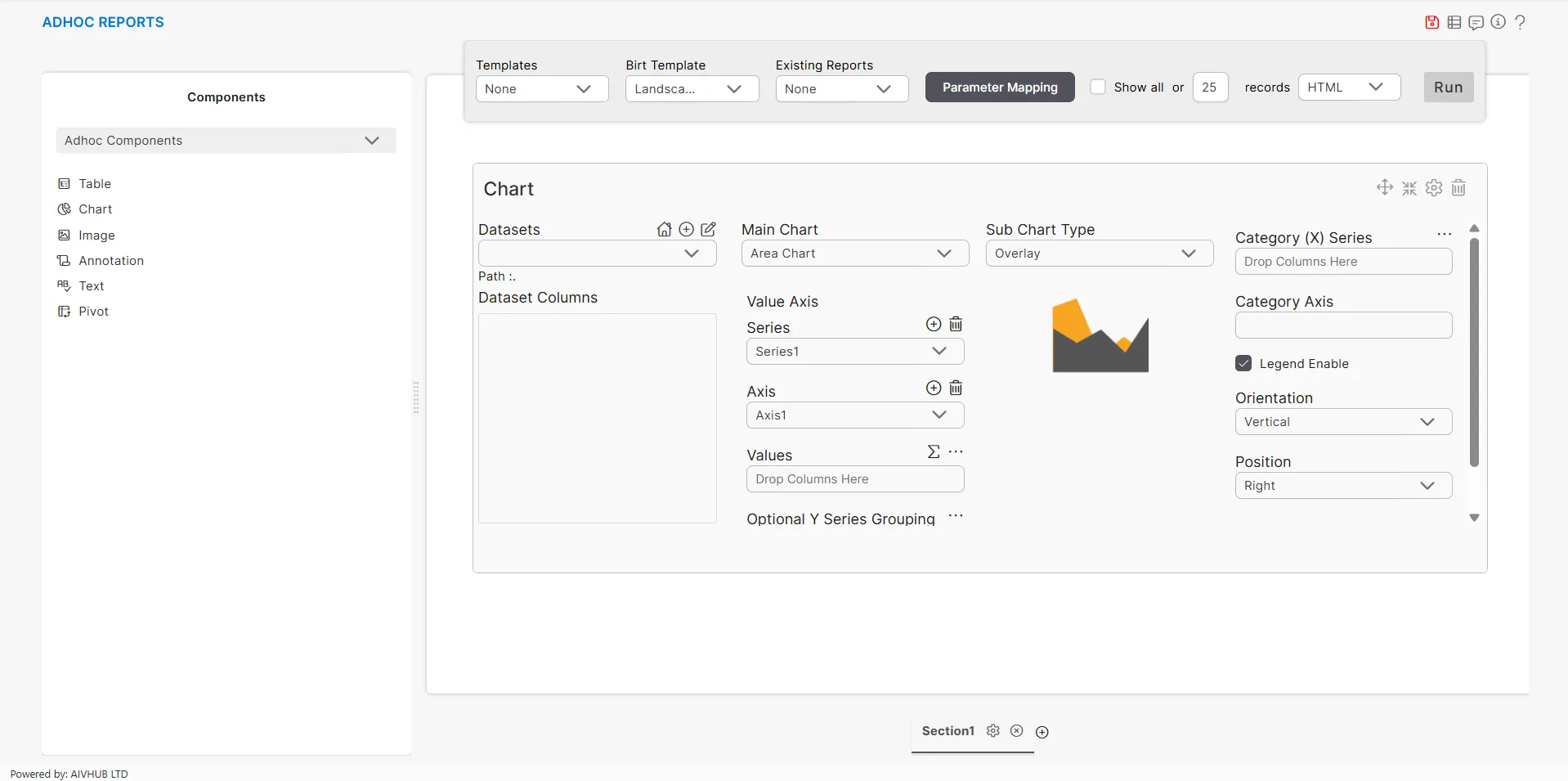
-
Now from the drop-down list of Datasets select the Sales.cds as follows:
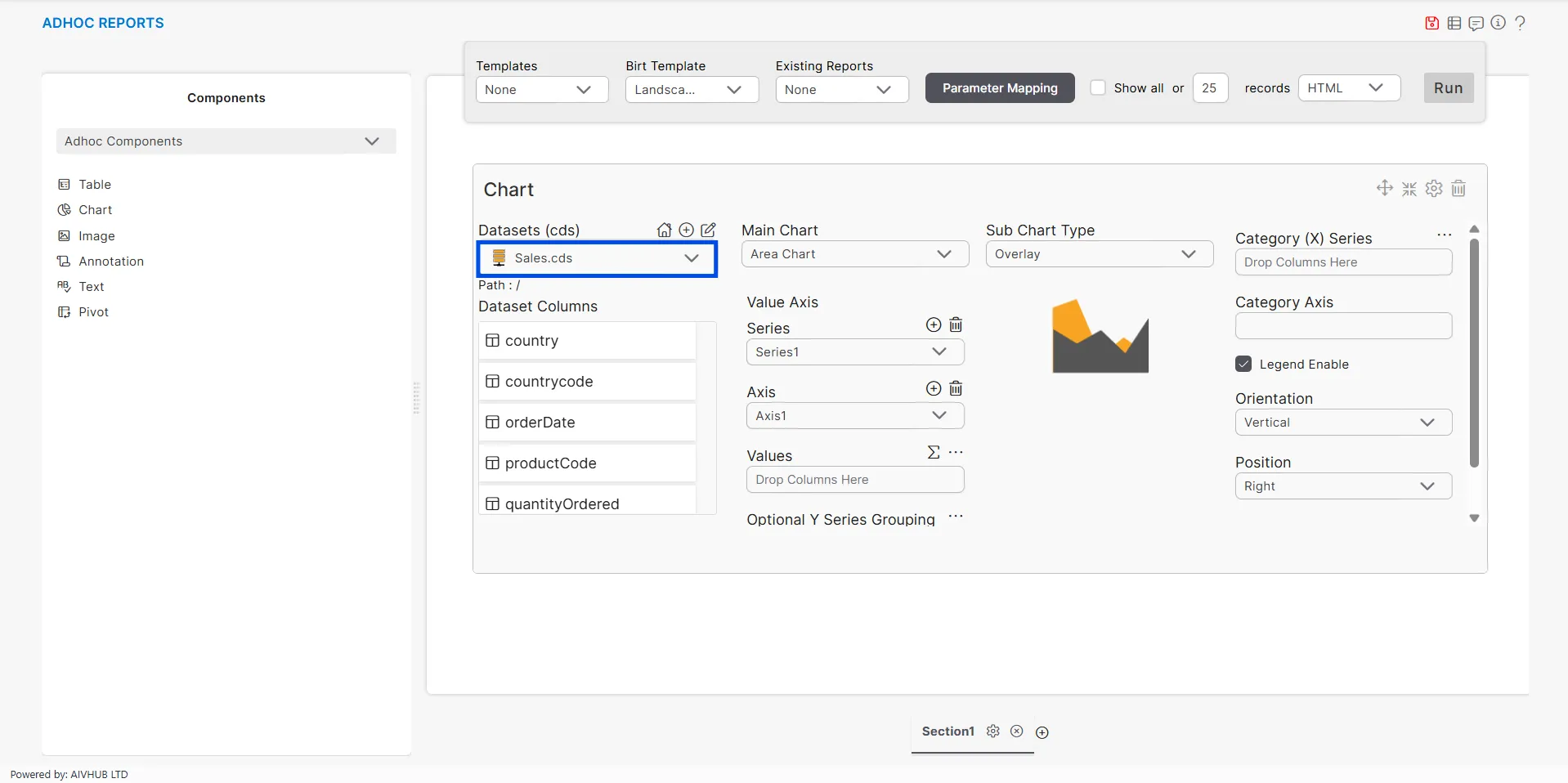
-
Once a dataset is selected, all its columns will appear in the Dataset Columns list below the dropdown.
-
Now drag and drop productLine into the Category (X) Series field and extendedPrice into the Values field, as shown below:
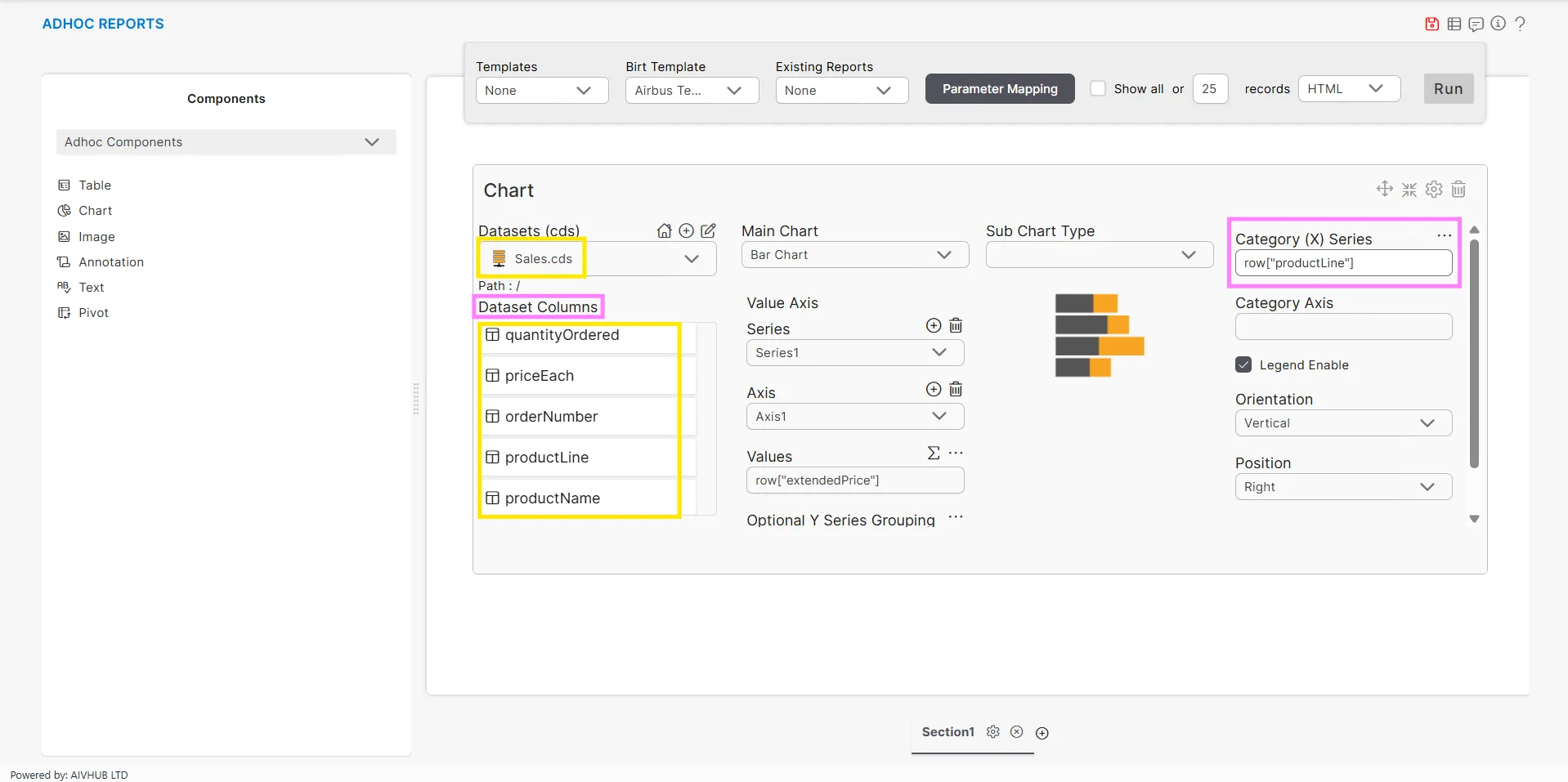
-
Click on the
 icon at right next to Values below dialog box will appear: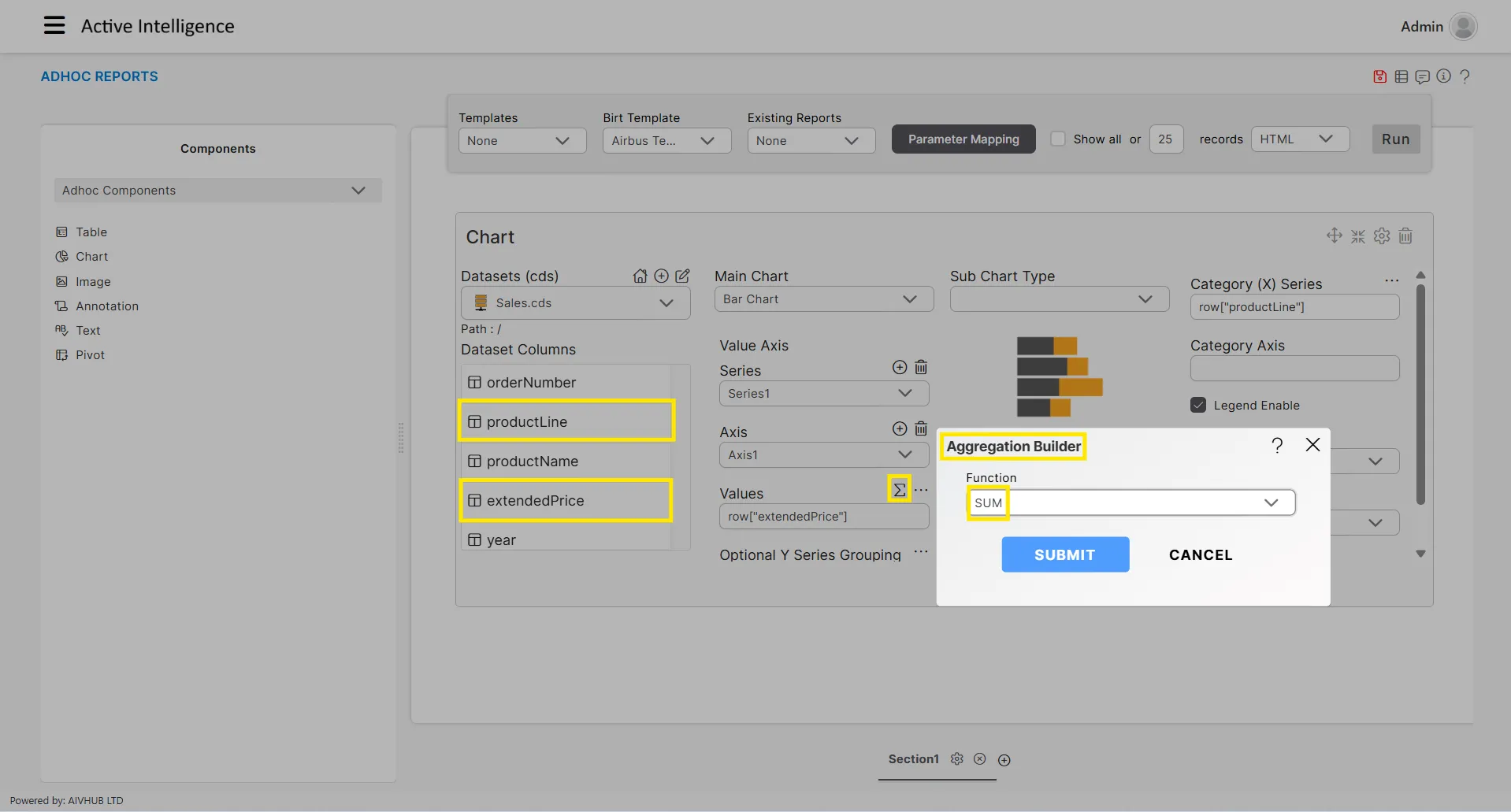
-
Click on SUM from the Function drop-down and then click on
 .
. -
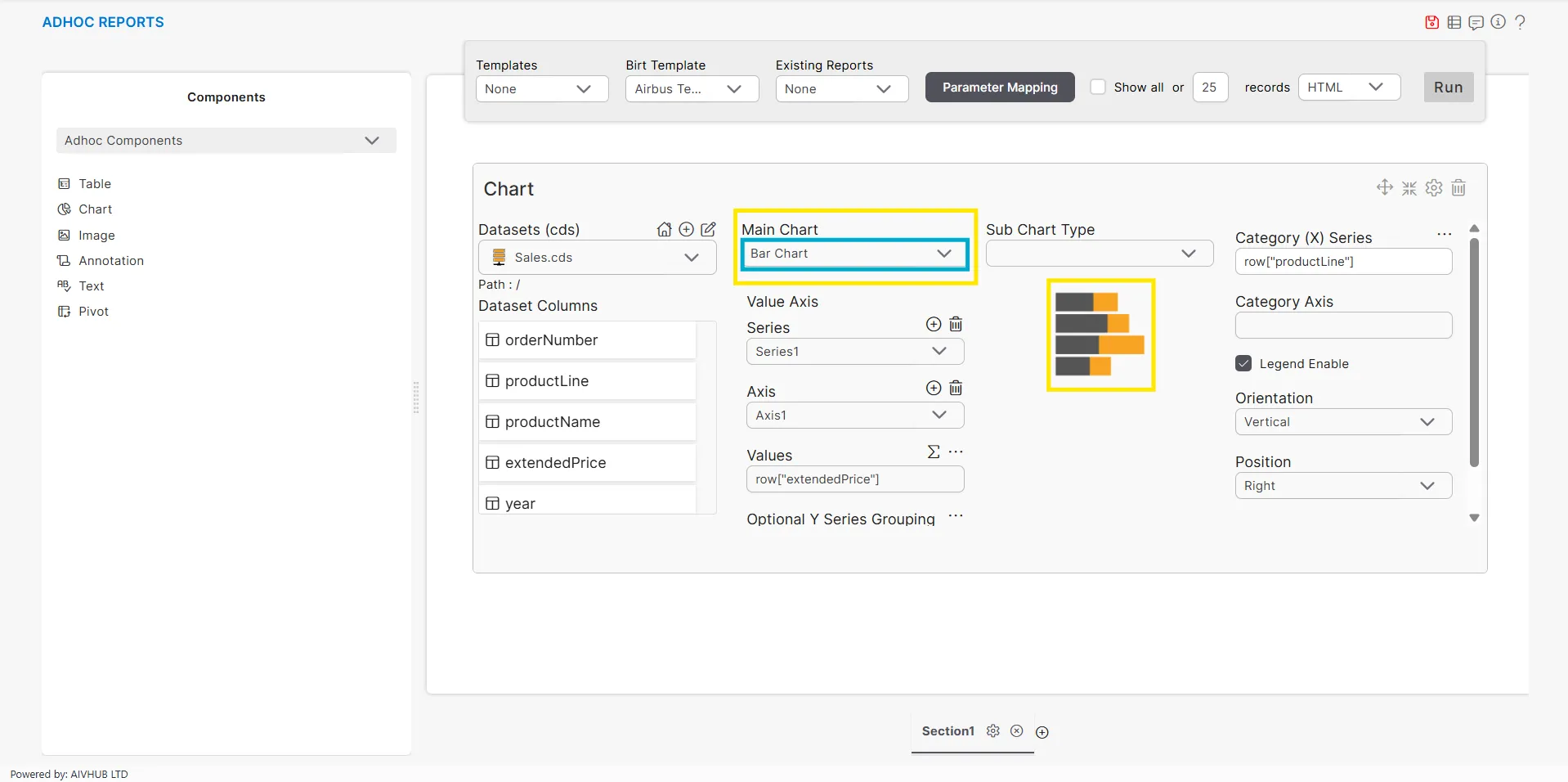
Select Bar Chart from the Main Chart dropdown as shown below:
-
Select Landscape View from the Birt Template drop-down as shown.

-
You can also specify the number of records to display per page using the widget located near the template selector:

-
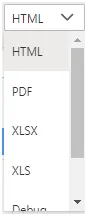
User can select format in which they want to run the report from the drop-down next to the Run option.
-
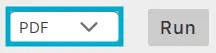
For this example, we select PDF as the output format.
-
To run the Ad-hoc Report using the Chart Component, click the Run button located at the top-right corner, as shown below.
-
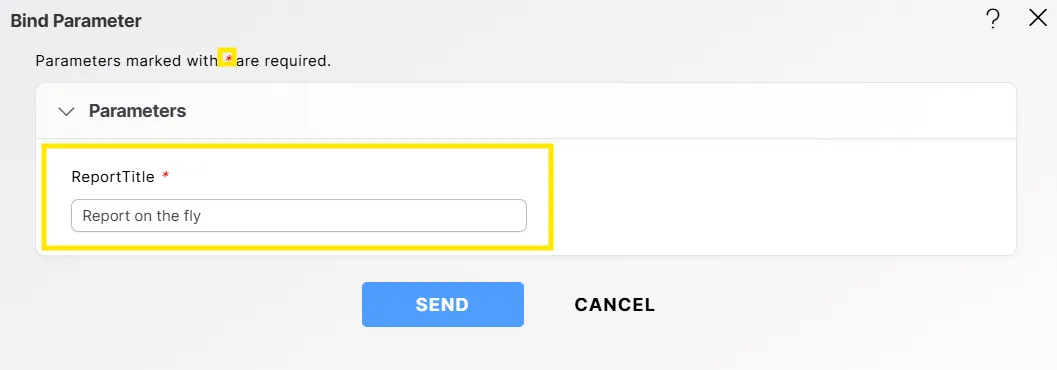
Clicking on the Run button opens the following dialog box:
-
Since the datset has no parameters, the user clicks the SEND button, and it redirects them to a new tab in the browser.
-
The Ad-hoc Report using Chart component will be generated in PDF.
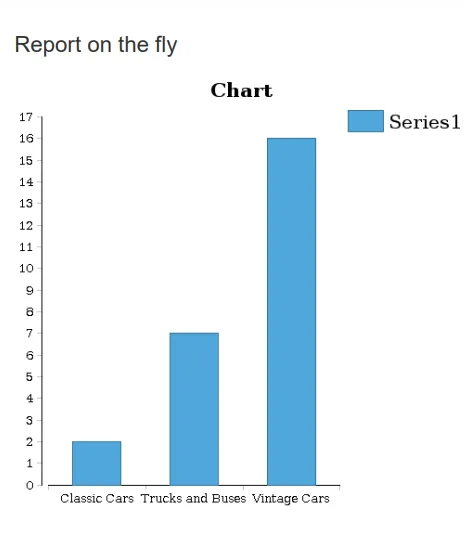
-
If you want to save your Chart, click the Save
 icon located at the top-right corner. This will open the following dialog box: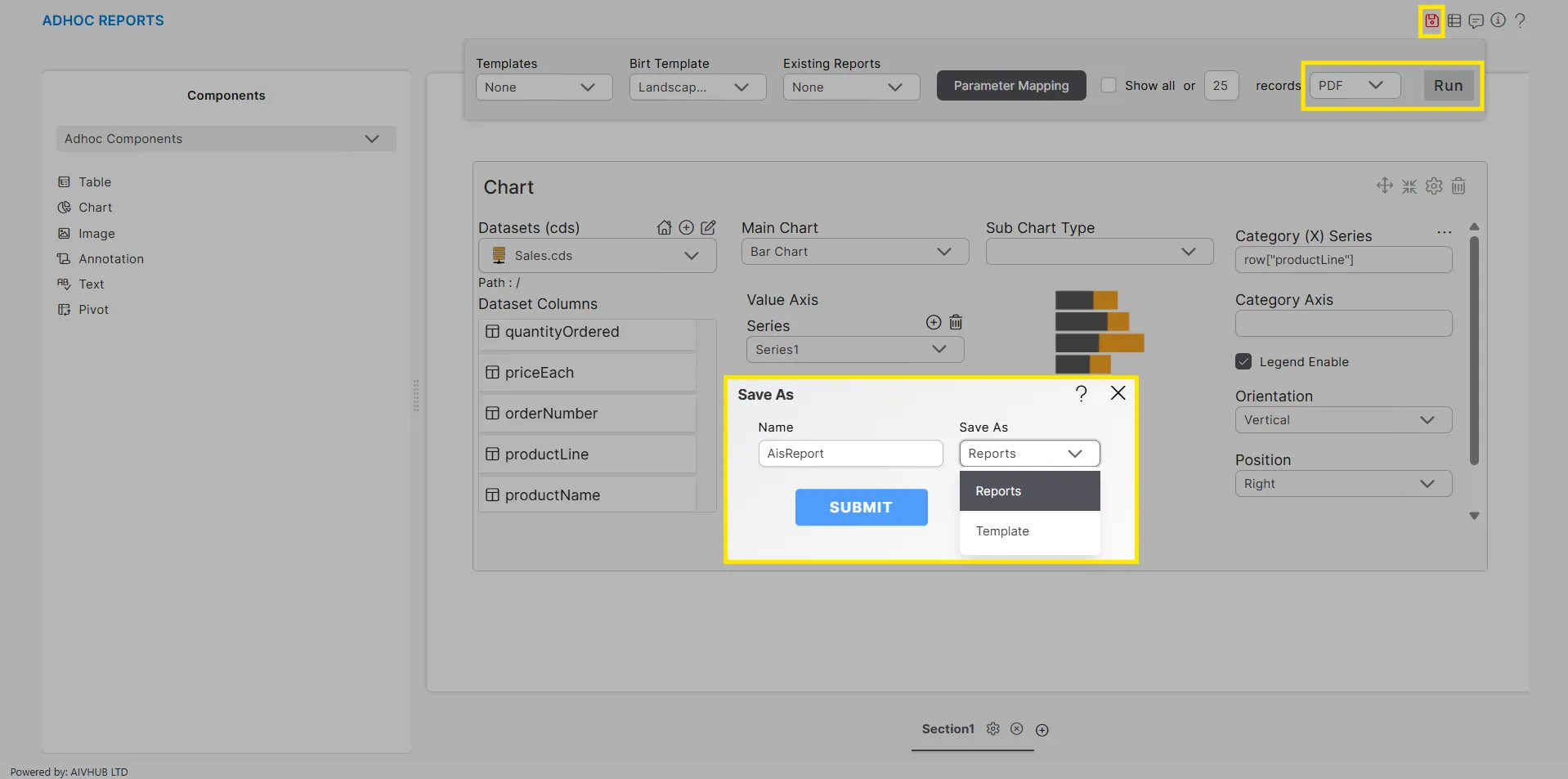
-
You can enter a custom name and choose either save as Reports/Template.
-
For this example; give Name: AisReport & Select Save As: Reports and click on submit button to perform the save operation.
-
If you want to change the settings of a component click on
 below Run which will open the following dialog box: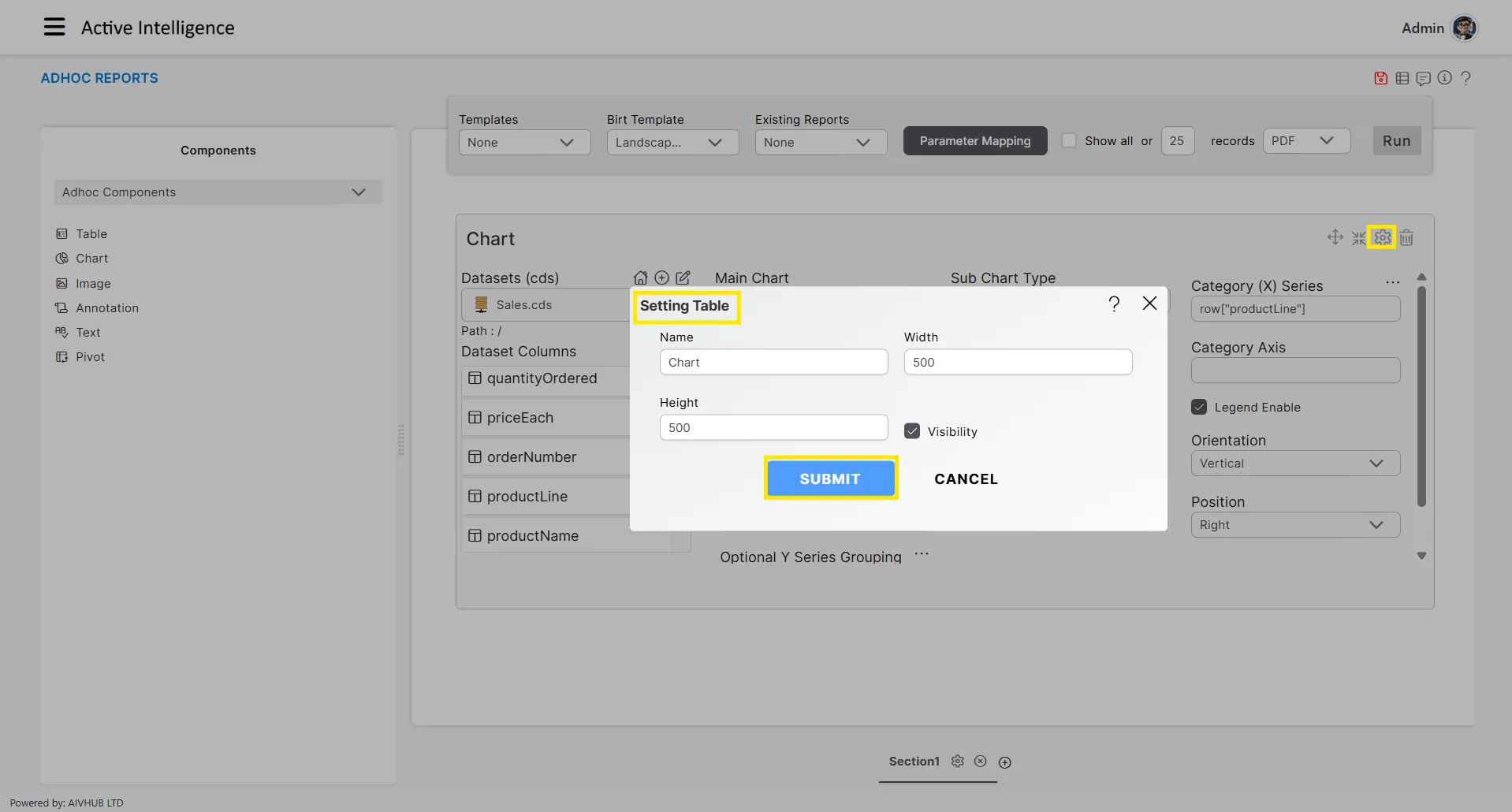
-
Here you are updating the chart’s Name, Width, Height, and Visibility settings, and then clicking the submit
button to save the changes. -
Similarly, click the Delete
 icon to remove the chart component.
The following graphical elements are available in Adhoc Reports:
Adhoc Table
Adhoc Image
Adhoc Annotation
Adhoc Text
Adhoc Pivot
Adhoc Pre-defined Components
Bind Parameters
Adhoc Embed Link
Bind Parameters
Adhoc Embed Link