General Tab Terminology (Query Configuration)
The General Tab is Step 3 in the Create Dataset workflow. It appears after you complete Step 1 – Data Source Selection and Step 2 – Connection Selection.
- Step 1 – Choose the type of data source (database, file, API, etc.). See Data Source Selection Terminology.
- Step 2 – Select or configure the connection or file. See Connection Selection Tab Terminology.
- Step 3 – General Tab – Define query logic, parameters, and dataset name (this page).
The General Tab is the primary configuration interface where you define how data is retrieved and how the dataset is identified.
This tab enables you to:
- Define query logic using the integrated Query Editor
- Configure parameters for dynamic filtering
- Assign a unique name to identify your dataset
Refer to Create Dataset for the full workflow, including how to reach the General Tab.
Query Logic
Purpose
The Query Logic configuration lets you define the data retrieval logic after a data source and connection are selected. The system opens the Query Editor, where you write SQL, select tables, or configure the query based on the source type.
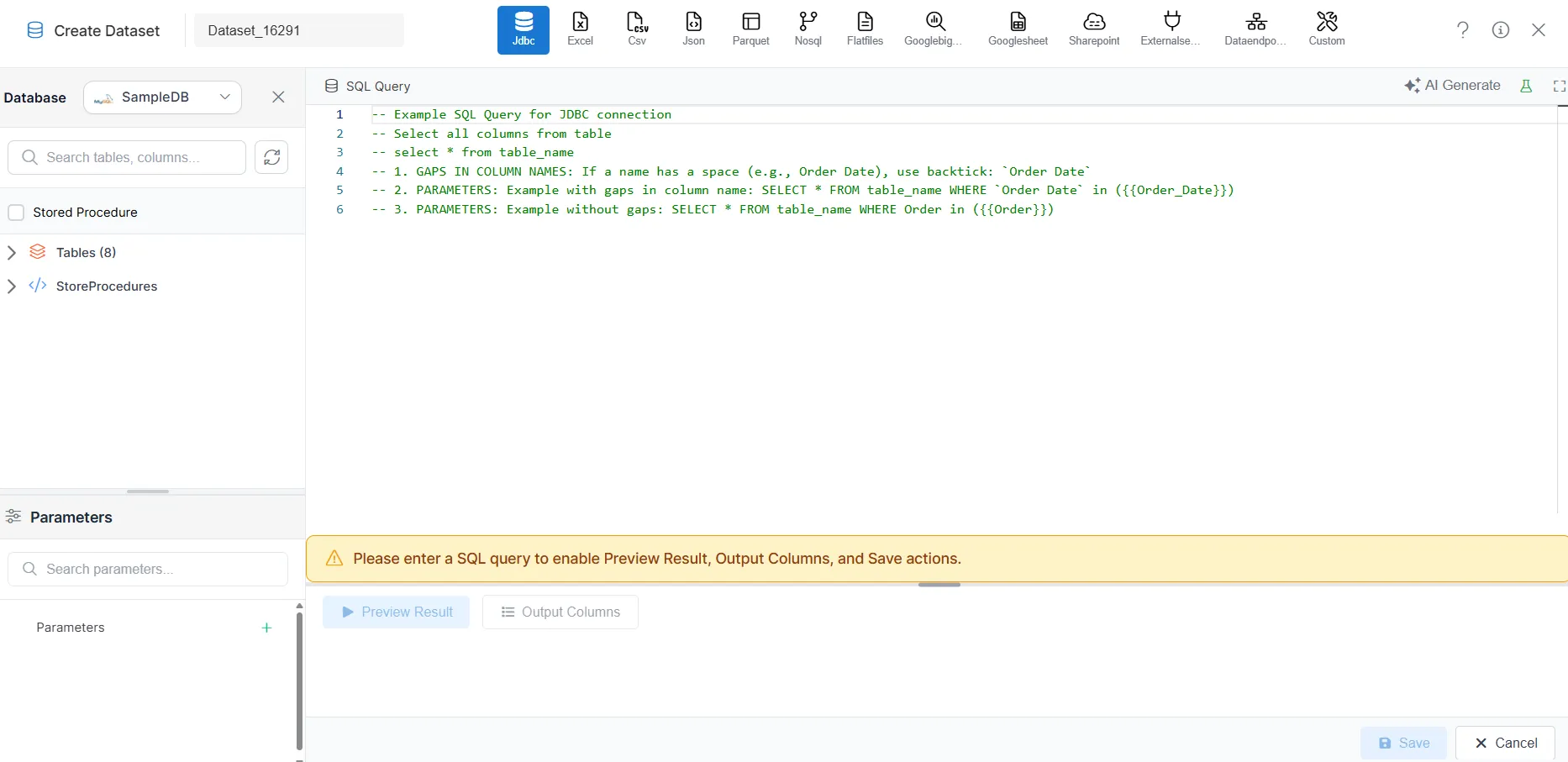
The Query Editor consists of three main components: the Database Explorer (left panel), the central workspace, and the top toolbar.
Left Panel – Database Explorer
Purpose
The Database Explorer provides navigation and discovery tools for your data source. Use it to find tables, columns, and stored procedures, and to define parameters.
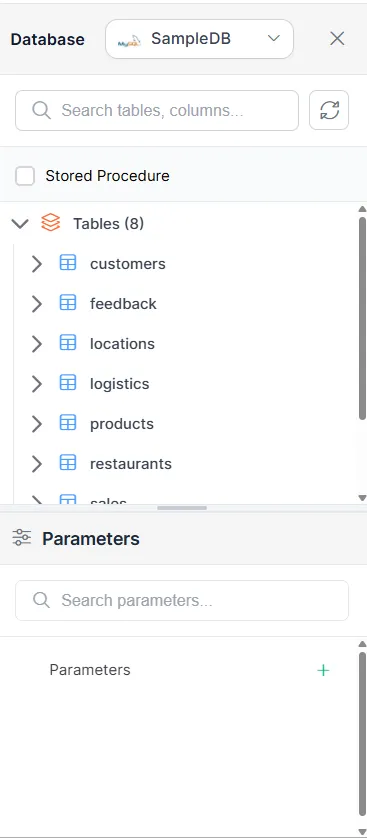
Components
Database Selection
- Database Dropdown – Displays and allows switching between available databases (e.g.,
SampleDB)
Search and Discovery
- Search Tables and Columns – Locate specific tables or fields within the database schema
- Tables Section – Expandable list of available database tables
Advanced Features
- Stored Procedures – View and access available stored procedures (availability depends on the database)
- Parameters Section – Define and manage dynamic query parameters
Key Points
- Expand table nodes to view available columns and data types
- Use the search function to quickly locate tables in large schemas
- Double-click table or column names to insert them into your query
Query Editor Workspace
Purpose
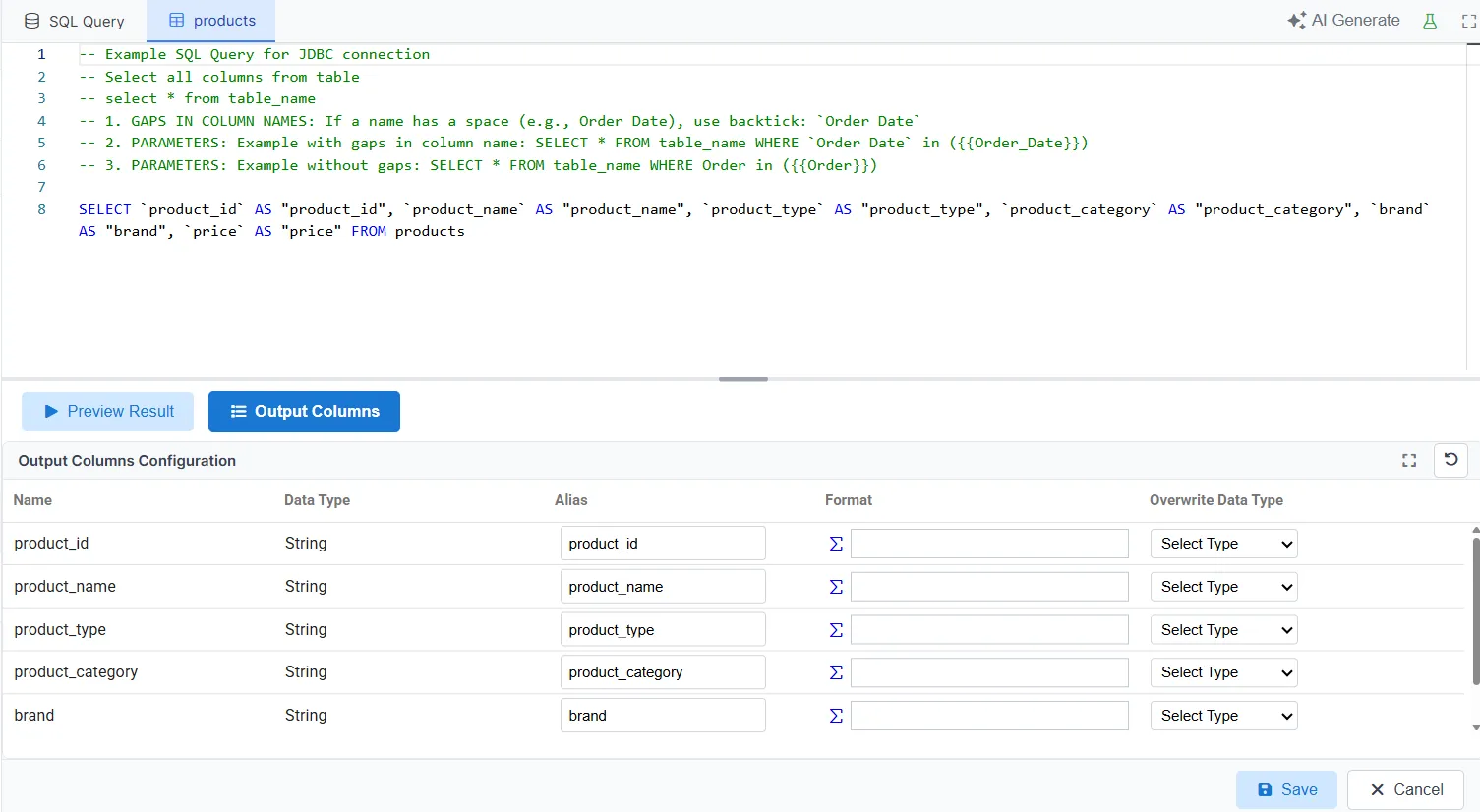
The central editor workspace is where you write and refine SQL queries or configure data retrieval logic.
Core Capabilities
- Write SQL Queries – Compose SELECT statements, JOINs, and complex queries
- Query Execution – Test queries and view results before saving
- Result Preview – Review returned data structure and sample values
- Column Metadata – View output column names and data types
Best Practices
- Test your query before proceeding to Output Columns and Preview
- Use meaningful aliases for calculated fields
- Validate output structure before saving
- Optimize queries for performance when working with large datasets
Top Toolbar – Data Source Quick Switch
Purpose
The toolbar provides quick access to switch between different data source types without returning to Step 1.

Supported Data Sources
- JDBC
- Excel
- CSV
- JSON
- Parquet
- NoSQL
- Flat Files
- Google BigQuery
- Google Sheets
- SharePoint
- External Services
- Data Endpoints
- Custom
Key Points
- Switching data sources clears the current configuration
- Save your work before switching to avoid losing changes
Parameters
Purpose
Parameters are dynamic placeholders that accept values at runtime, enabling flexible and reusable dataset queries. They are defined in the Parameters section of the Database Explorer within the General Tab.
Example Usage
SELECT *
FROM products
WHERE brand IN ({{Brand}})
In this example, {{Brand}} is a parameter whose value is provided at runtime.
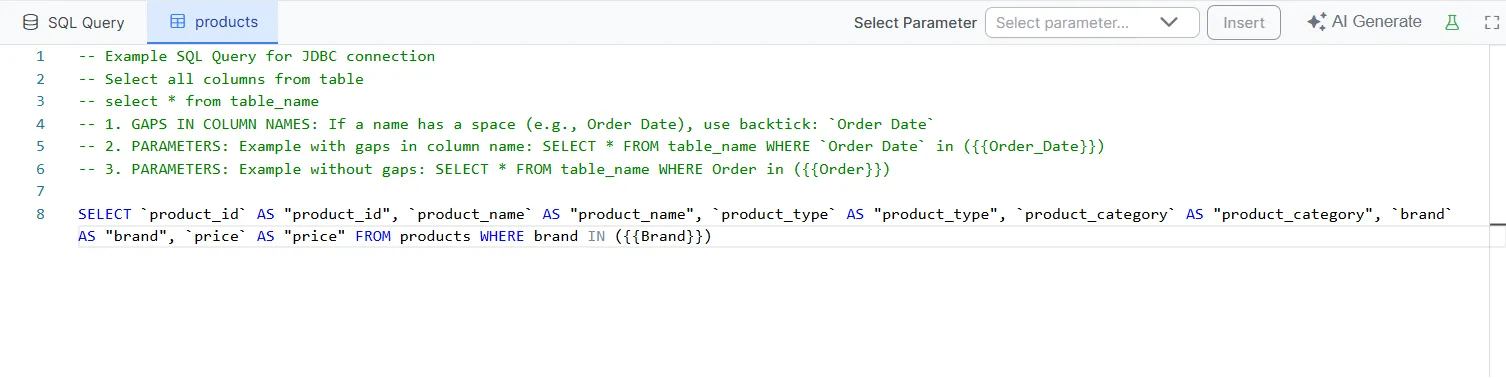
For detailed instructions on creating, configuring, and managing parameters, refer to the Parameter Configuration Guide.
Dataset Name
Purpose
The Dataset Name uniquely identifies your dataset within the system. It is required before saving and is visible in the Dataset List View, dashboards, and reports.

Naming Best Practices
- Use clear and descriptive names
- Follow consistent naming conventions across datasets
- Avoid special characters that may cause issues in URLs or exports
- Ensure the name is unique within your workspace
Summary
The General Tab establishes the foundation of your dataset by enabling you to:
- Define data retrieval logic using the Query Editor and Database Explorer
- Configure optional dynamic parameters for flexible, reusable queries
- Assign a meaningful dataset name for identification across the system