Dataset Using JSON
This guide explains how to create a dataset in AIV using JSON (JavaScript Object Notation) files. JSON is a lightweight, text-based format for storing and transporting data that is easy to read and parse.
What is JSON?
JSON (JavaScript Object Notation) is a text format for storing and transporting data. It is self-describing and widely used for structured data exchange. AIV supports JSON files as a data source for creating datasets.
Prerequisites
Before you begin:
- Download the sample
json.zipfile from this link. - Extract the zip file to access
employee(1).json. - Upload the file to Shared Resources. For instructions, see Upload documents.
Steps to Create a Dataset Using JSON
Step 1: Upload the JSON File to Shared Resources
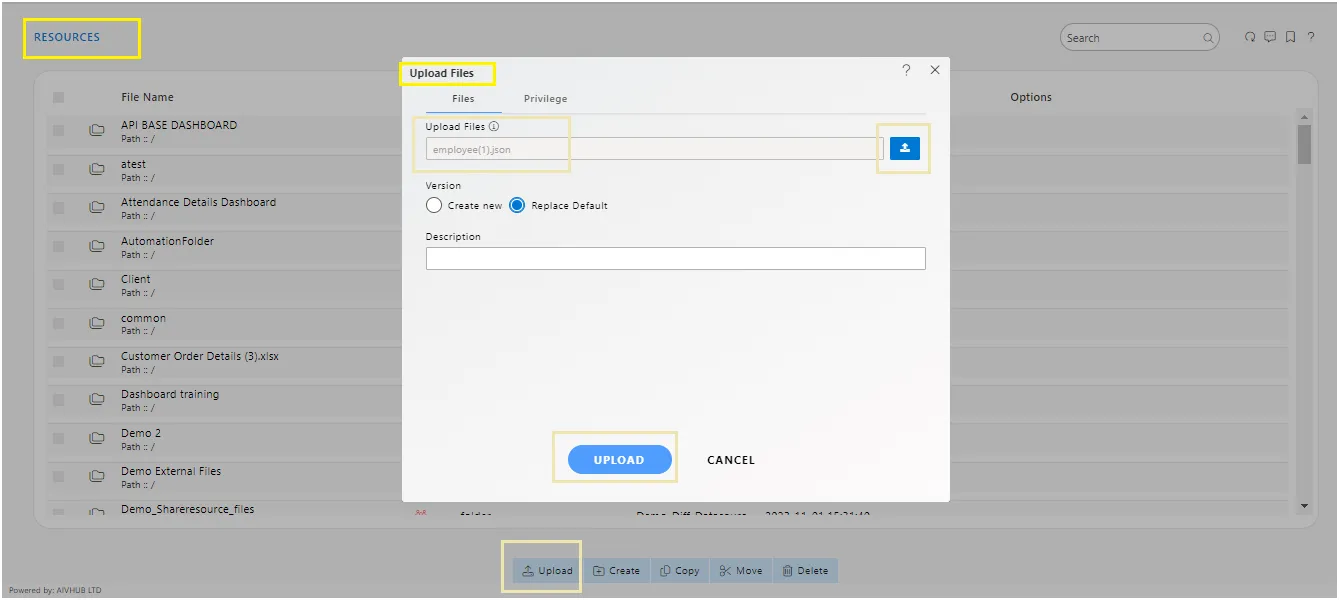
- From the hamburger menu, click Document and go to Shared Resources.
- Click Upload.

- Select the
employee(1).jsonfile from your extractedjson.zip. - Click Upload.
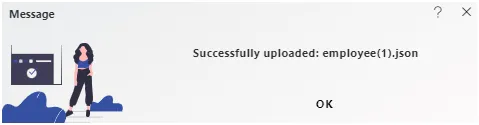
- Confirm the success message appears.
Step 2: Navigate to Master Data
- In the Master Data tab, click Dataset.
- Click Create Dataset from the bottom menu or action bar.

Step 3: Create the Dataset
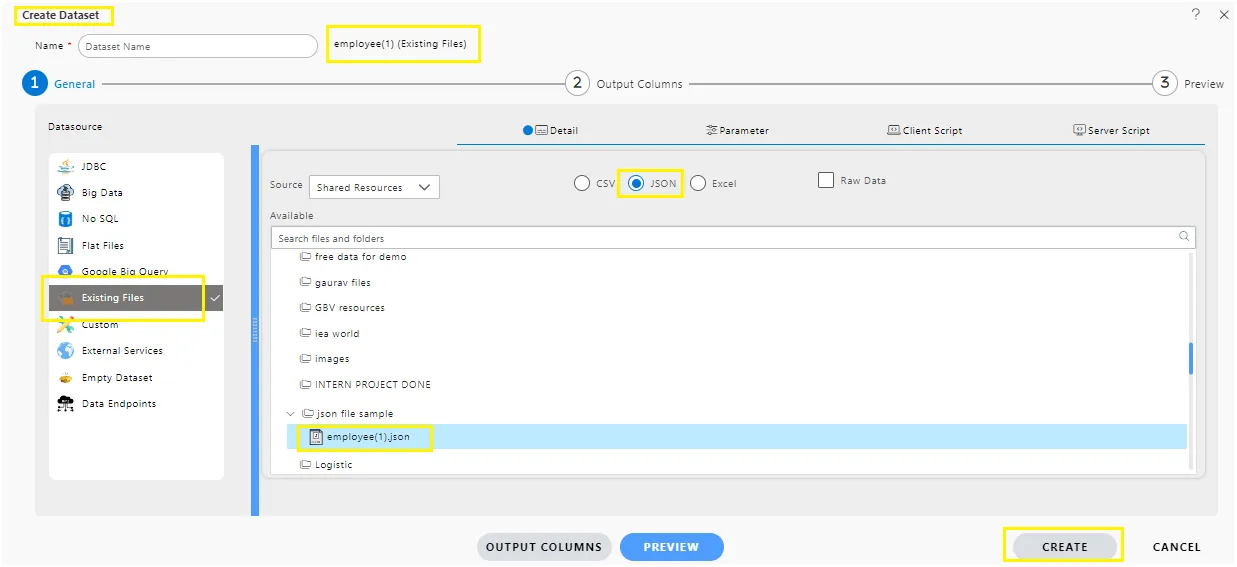
- In Create Dataset, enter:
- Name: Employee JSON (or your preferred name)
- Datasource: Existing Files
- In the Details tab, select JSON as the file type.
- Choose
employee(1).jsonfrom the list view. - Fill in any additional configuration as needed.
Step 4: Validate and Preview
- Open the Output tab to ensure columns are detected correctly.
- If columns appear as expected, open the Preview tab to verify the data.
- Click Create to save the dataset.
Step 5: Use the Dataset
The dataset appears in the Dataset section and is ready for use in dashboards and widgets. To add it to a dashboard, see Create Table Widget.

Related Guides
Explore other ways to create datasets in AIV:
| Data Source | Guide |
|---|---|
| Drag & drop | Create Dataset |
| Excel | Dataset using Excel |
| CSV | Dataset using CSV |
| Parquet | Dataset using Parquet |
| NoSQL | Dataset using NoSQL |
| Flat files | Dataset using Flat files |
| Google BigQuery | Dataset using Google BigQuery |
| Google Sheet | Dataset using Google Sheet |
| External sources | Dataset using External sources |
| Stored Procedure | Dataset using Stored Procedure |
| View | Dataset using View |